What I do
Customer support operations, team leadership, Voice of Customer, onboarding and enablement
A team lead who has carried both the metrics and the people, and built the systems underneath them.
I am Ana Santana. Eight years turning customer reality into decisions and leading the teams that act on them, on a clinical foundation of evidence before assertion. AI is leverage now. Deciding what is actually true, and what to do about it, still is not automatable. That is the work I do.
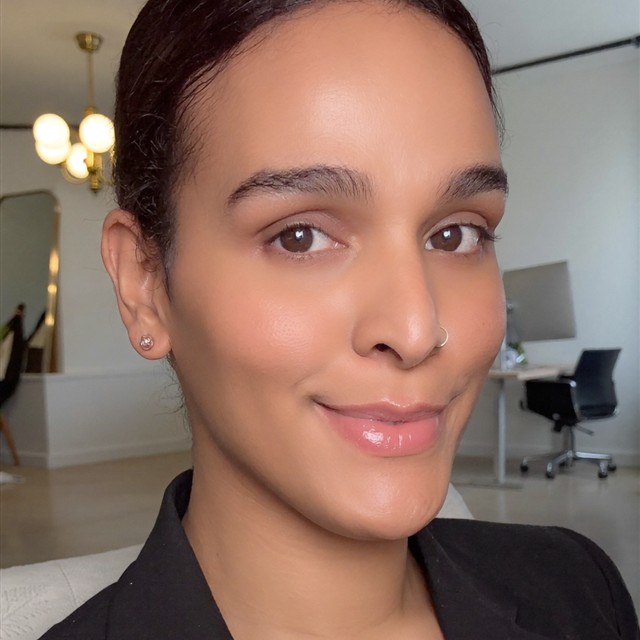
Eight years on enterprise customer teams. The figures above are one chapter: Autodesk, FY22, onboarding a new team and standing up chat support.
A team lead who has carried both the metrics and the people, and built the systems underneath them.
The messy middle is where I am most useful. I turn the tangle into a sequence people can actually run.
Built on with operations and AI solutions. The habit of demanding evidence before assertion is the through-line.
As a team lead, everyone read the resolution numbers and relaxed. They looked healthy, and they were misleading. A rep scoring below average on CSAT was not failing, they were taking the hardest cases. Running community later, the same trap: the loudest contributor is rarely the most valuable, and the member who posts least but reads most can matter just as much. A metric that treats every context as the same context hides the truth. The fix was never a better dashboard. It was measuring what the number actually meant.
Everyone wanted to automate, add AI, open new channels, collect more. Collection was never the bottleneck. The real problem sat on either side of it: the intake, and the commitment to close the loop after the report went out. More channels would only bury the signal deeper. The work was curating what was already there and elevating the voices that popularity had quietly silenced, the ones that mattered without shouting. Less, done better, beat more.
Moving into a new domain looked like starting over. It never was. The work rewarded instincts I already had, they just needed retranslating. Clinical triage became prioritization. Reading a patient became reading an account. The move was never learning from zero, it was recognizing what already transferred and refusing to mistake a new vocabulary for a new beginning.
There are more of these, and the endings land better in person. Ask me anything →
Expertise without AI is a head start you refuse to use. Anyone can prompt a model. I study how they actually work, so I can tell what is true, which is the part that stays human. I run AI through four moves that each take expertise.
Hand the grunt to the model.
The output is only as good as the spec. Knowing exactly what to ask for is the skill.
Tell the true from the merely plausible. This is where taste lives, and where the model cannot help you.
Own the call. AI drafts, I sign.
My adoption method, made real. Nine phases, three beats, one wheel that turns higher each pass. It moves a team from first exposure to fluent, unprompted use, then turns what they ask for next into product decisions that close the loop back to them. It is proof of how I think, not a product to buy.
Open Fluency →The method is mine. Concept, model, build.
Before customer teams, I trained in a clinical world where being wrong had real consequences. That is where the habits come from: diagnose the root cause before you treat the symptom, respect the evidence, stay precise when the stakes are real.
A slow metric is a symptom, and the cause is usually upstream. A feedback loop is a feedback loop, whether it runs through an organ or an org. I carried that discipline out of medicine and into customer operations and AI, and it is still the through-line.
I have always been the point in the middle, where the ground truth meets the decision.
Yes, I have a LinkedIn. I am not the most active there, but if that is where you are, come say hi. I want to be part of the conversation. Find me there →